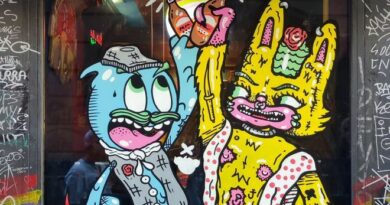
Great Works of English Literature: Frankenstein by Mary Shelley
Welche Bücher haben die englischsprachige Literatur geprägt? Die Rubrik „Great Works of English Literature“ stellt einige der bekanntesten Werke vor. In der aktuellen Ausgabe der Read On wird es Halloween-mäßig schaurig: Vorgestellt wird Mary Shelleys Horror-Klassiker Frankenstein, der ein ganzes Genre geprägt hat und bis heute Denkanstöße zur ethischen Verantwortung von Wissenschaft gibt. Dazu passend wird in der aktuellen Rubrik „Language Corner“ auch das Eigenleben des Präfix „Franken-“ in der englischen Sprache beleuchtet – ebenfalls zu lesen in der aktuellen Ausgabe der Read On.
Frankenstein by Mary Shelley
The classic horror novel about a scientific experiment gone wrong has shaped a genre and still gives readers food for thought.
By Franziska Lange
1 In the cold and stormy summer of 1816, on the shores of Lake Geneva, four friends got together in a villa. To kill time during that gloomy summer, they decided they would each write a ghost story.
2 One of them, 18-year-old Mary Godwin, later Mary Shelley, would produce one of the most famous horror stories ever: Frankenstein.
3 The novel starts with the letters an explorer called Robert Walton sends to his sister in England to tell her about his journey on a ship towards the North Pole.
4 One day, Walton and his crew take in an exhausted traveller. As the traveller slowly gets better, he tells Walton about his life.
5 His name is Victor Frankenstein. He is from a rich Swiss family and had a very pleasant childhood. The death of his mother, however, was a deep shock, and it planted a seed in him: the wish to revive the dead.
6 Frankenstein tells Walton that he studied at the university of Ingolstadt, Germany. He was a very ambitious student and wanted to achieve something great. Soon, his goal became clear.
7 Frankenstein began putting body parts from graves and morgues together to create a human-like creature. After months of work, his creation was done, and he gave it the “spark of life”.
8 Frankenstein thought his creation would be perfect, but he was wrong. In fact, it was a horrible monster.
…
Den vollständigen Artikel lesen Sie in der aktuellen Ausgabe der Read On.
Vocabulary
0–3 to shape s.th. etw. prägen — food for thought (fig) Denkanstöße — Lake Geneva Genfer See — to kill time (fig) Zeit totschlagen — gloomy düster; trist — ghost story Schauergeschichte
4–5 exhausted erschöpft — Swiss Schweizer — to plant a seed in s.o. (fig) in jdm. den Keim zu etw. legen — to revive the dead die Toten wieder zum Leben erwecken
6–8 ambitious ehrgeizig — body parts Leichenteile — morgue Leichenhalle — creation Schöpfung, Werk — spark of life Funke des Lebens
Foto: KI-generiert